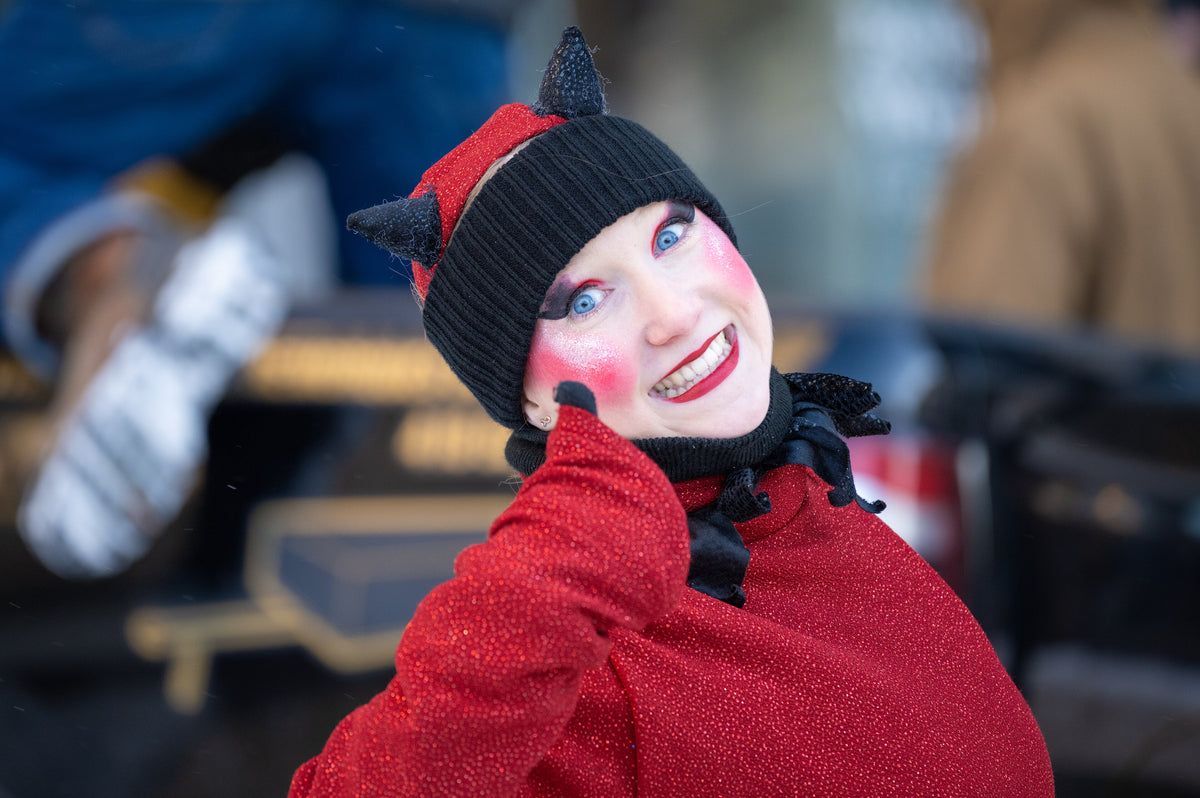
February 5–10, 2027: Québec City Winter Carnaval Photography Workshop with Steve Simon & Marc Rochette
An Intensive & Immersive Winter Photography Experience with Steve Simon & Marc Rochette — February 5–10, 2027. Five nights accommodation at Hôtel 71 included.
As with all my Passionate Photographer Masterclasses, this is a mentorship workshop. Before we meet in Québec City, we’ll schedule a one-on-one Zoom session to review your portfolio and discuss your photography, gear and approach—regardless of brand or system.
There will also be a pre-workshop group meeting and lecture, as well as a post-workshop Zoom session where you’ll present a refined sequence from the work you created in Québec City.
- Dates: February 5–10, 2027
- Location: Québec City, Canada
- Accommodation: Five nights at Hôtel 71 included
- Genre: Street, Documentary & Travel Photography
- Group Size: Maximum 6 photographers
- Instructors: Steve Simon & Marc Rochette
- Skill Levels: All Skill Levels
Workshop Details

QUÉBEC CITY WINTER STORIES
Photographing the Soul of Québec City During Carnaval
February 5–10, 2027
Six Photographers Only
With Steve Simon & Marc Rochette
Five Nights Accommodation at Hôtel 71 Included
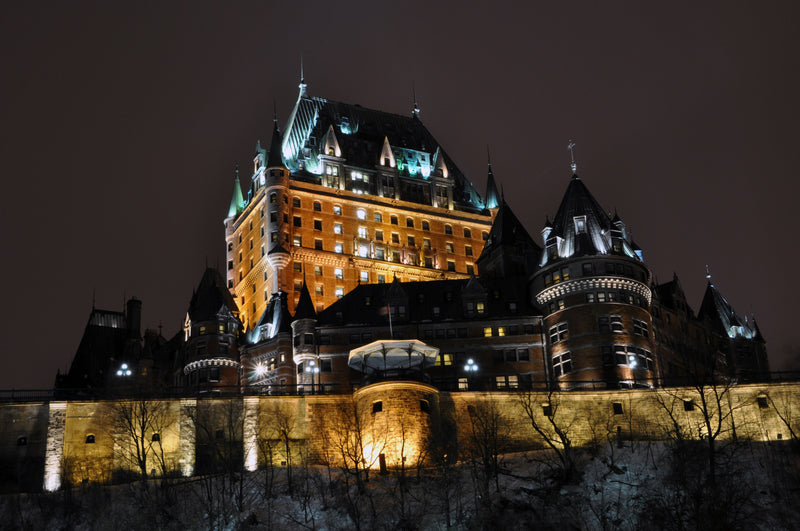
There are few cities in North America quite like Québec City in winter.
Snow changes everything. It simplifies the landscape, reflects light into places that would otherwise be dark, softens the streets and transforms the familiar. Add the Québec Winter Carnival and suddenly the city becomes a remarkable stage for photography: crowds moving through falling snow, night parades, ice sculptures, winter light, bundled figures, steaming cafés and the daily life of one of North America’s oldest cities continuing around it all.
For six days and five nights, Marc Rochette and I will use Québec City as our photographic laboratory.
This is not a tour of Québec City with cameras. It’s a photography workshop built around learning to see more clearly, react more instinctively and stay with promising situations long enough to make photographs that go beyond the obvious.
We’ll work the streets during the quiet of early morning, photograph the energy and spectacle of Carnaval, follow changing winter light, work after dark and spend time inside reviewing and talking about the photographs we’re making.
And because this is February in Québec, we’ll let the weather become part of the work.
Snow, fog, cold, wind, brilliant sunshine, blue hour. Whatever Québec gives us, we’ll photograph it.

AN INTIMATE WORKSHOP: SIX PHOTOGRAPHERS, TWO INSTRUCTORS
For this workshop, I’ll again be working with my good friend and colleague Marc Rochette, a deeply experienced photographer and thoughtful teacher whose work is rooted in patience, observation and respect for the human moment.
Marc brings more than five decades of photographic experience to the workshop, along with the calm, grounded presence that comes from years of editorial, commercial and personal work.
Together, Marc and I will help you slow down, look harder and respond more instinctively to what is unfolding in front of you.
The workshop is deliberately limited to just six participants.
That scale matters.
With Marc and me working with only six photographers, there is time for individual attention in the field, real conversations about your work and critiques that go beyond a quick look at a few photographs.
We want to get to know how you photograph, what you’re drawn to and where you might be holding yourself back.
FIVE NIGHTS AT HÔTEL 71 ARE INCLUDED

Our home for the workshop will be Hôtel 71, at 71 rue Saint-Pierre in the heart of Québec City's historic Old Port.
Your five nights of accommodation, February 5–10, are included in the workshop.
The location could hardly be better for photographers. Step outside and we are immediately in one of the richest visual areas of the city, within walking distance of Petit-Champlain, Place Royale, the waterfront and the streets of Old Québec.
The hotel itself occupies a handsome historic building originally constructed in the 1850s for Canada's first French-speaking national bank. Today it combines that history with contemporary rooms and comfortable common spaces.

Just as important for us, Hôtel 71 offers dedicated meeting facilities where we can gather for lectures, editing and critique sessions. That means the hotel becomes more than somewhere to sleep. It becomes our workshop headquarters.After photographing outside, we can come back, warm up, look at what we’ve done and figure out where we need to go next.


WHY QUÉBEC CITY IN WINTER?
Winter strips a city down.
Color becomes more selective. Light reflects from snow. Breath becomes visible. People move differently. Clothing changes gesture and shape. Warm windows glow against cold streets.
And photographers have to adapt.
Then there is Carnaval.
The Québec Winter Carnival runs February 5–14, 2027, meaning we will be there from opening day and through the first half of the celebration.
Carnaval brings an entirely different layer of life to the city: ice and snow sculptures, Bonhomme's Ice Palace, nighttime events, music, crowds and some wonderfully eccentric winter traditions.
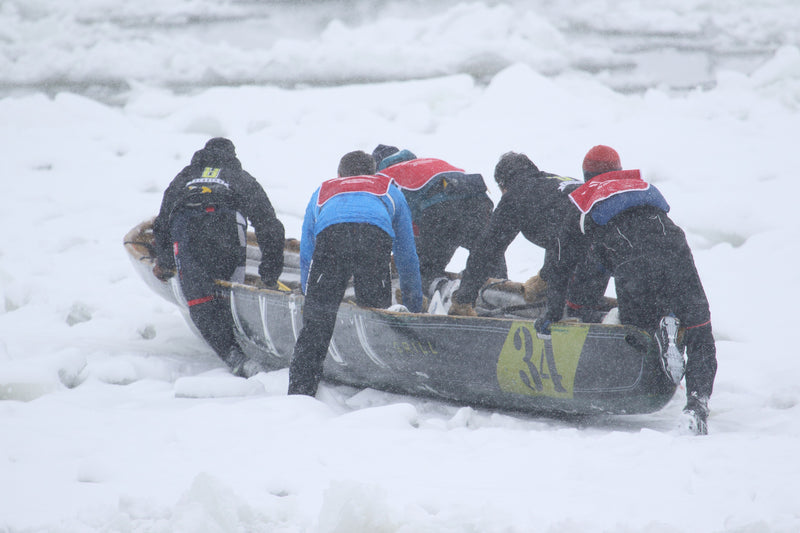
Among the events we expect to photograph are the famous ice canoe race across the St. Lawrence and one of Carnaval's night parades, subject to the final 2027 Carnaval schedule.
But some of our strongest photographs may happen between the events.
A family walking home through the snow.
Someone alone beneath a streetlight.
A face glimpsed through a fogged café window.
The contrast between celebration and ordinary life.
The photograph we didn't know we were looking for.
That's street photography.
WELCOME DINNER TBD
Québec City's historic center gives us an extraordinary visual environment, but beautiful places present their own photographic challenge.
It is easy to make a beautiful photograph here. It is harder to make one that feels like yours. We’ll work beyond postcard views and concentrate on people, gesture, light, layers and the relationship between contemporary life and the historic city around it.
We’ll photograph both Upper Town and Lower Town, returning to certain streets as the light and activity change.
PETIT-CHAMPLAIN & PLACE ROYALE
Narrow streets, stone buildings, staircases, shop windows and constantly changing pedestrian traffic make this one of our natural laboratories for working a scene.
Rather than walking through looking for isolated photographs, we’ll identify promising backgrounds and situations and give them time.
Watch. Wait. Move a few feet. Change your height. Look at the edges. Wait for the gesture that brings everything together. Sometimes the difference between an ordinary photograph and a memorable one is another thirty seconds.

THE QUÉBEC WINTER CARNIVAL (Feb 5-14, 2027)
Carnaval gives us something street photographers rarely get: a city temporarily behaving differently.
People dress differently. Strangers interact. Public spaces become stages. Spectacle and ordinary life overlap.
We’ll use the celebration not simply as an event to document but as raw material for more personal photographs.
The challenge will be to get beyond pictures that merely say, "I was at Carnaval."
We want photographs with energy, ambiguity, humor, gesture and surprise.
THE ICE CANOE RACE
One of Québec's great winter traditions is the ice canoe race across the St. Lawrence.
Teams negotiate a constantly changing mixture of open water, current and ice, alternately paddling and pushing their canoes across the frozen sections.
It should give us a completely different kind of photographic problem to solve: action, repetition, scale, crowds, winter atmosphere and the extraordinary landscape of the St. Lawrence.
We'll scout the possibilities and determine our photographic strategy once the official 2027 race details are finalized.
[KEEP EXISTING IMAGE]
CARNAVAL AFTER DARK
Winter night photography in Québec can be extraordinary.
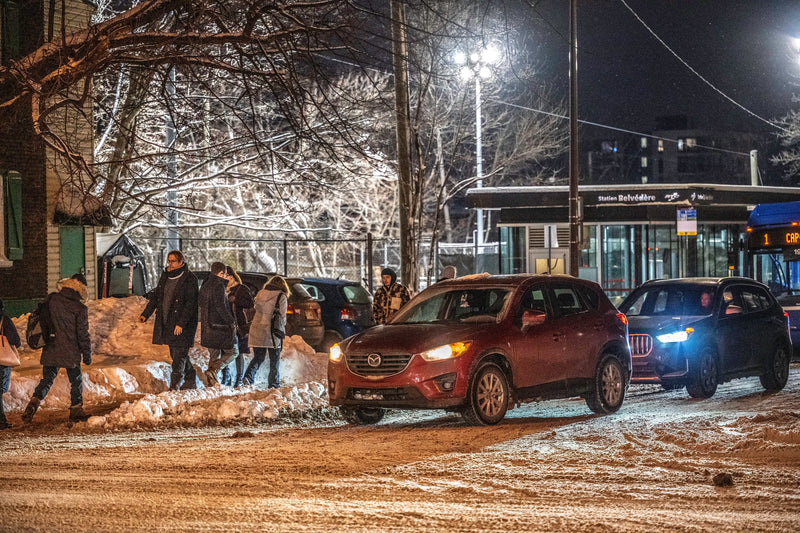
Snow reflects artificial light. Streetlights take on color. Warm interiors contrast with the cold blue outside. Steam and breath become part of the atmosphere.
And Carnaval adds another layer.
One evening we expect to photograph a Carnaval night parade, subject to the final 2027 schedule.
Rather than standing in one position and simply documenting everything that passes, we'll think about foregrounds, backgrounds, layers and the people watching the parade as much as the parade itself.
Often the better photograph is happening behind you.
SAINT-ROCH & THE CITY BEYOND THE POSTCARD
Québec City is much more than its historic center.
We’ll spend time in neighborhoods such as Saint-Roch, where the visual language shifts toward contemporary city life.
This contrast matters.
If we're trying to create a body of work about Québec rather than a collection of pretty pictures, we need different kinds of photographs: grand and intimate, historic and contemporary, crowded and empty, light and dark.
We want photographs that speak to one another.
[KEEP EXISTING IMAGE]
WINTER BECOMES PART OF THE PHOTOGRAPH
We won't be waiting for "good weather."
In February, weather is part of the story.
Snow can simplify a chaotic background.
Falling snow can create depth.
Fog can remove information.
Wet pavement can double the light.
Cold can change people's gestures and behavior.
Even condensation on a window can become part of a photograph.
We’ll talk about protecting ourselves and our equipment, working efficiently in the cold and recognizing when difficult weather is actually giving us something visually extraordinary.
WORKSHOP APPROACH
This isn't about chasing moments.
It's about learning how to see them coming.
We'll focus on:
• Recognizing strong situations before they peak
• Working a scene by moving, adjusting and refining
• Understanding distance, gesture and timing
• Using winter light to shape mood and meaning
• Building layered, intentional compositions
• Working confidently around people
• Moving beyond the first obvious photograph
• Recognizing when a scene is worth staying with
• Learning to anticipate rather than simply react
You'll be encouraged to stay with subjects, revisit locations and keep working after you think you have the photograph.
That's often when something changes.
STREET TECH
The best camera technique is the technique you don't have to think about when the photograph appears.
We'll simplify your process so you can respond without hesitation.
We'll cover:
• Autofocus strategies and customization
• Zone focusing versus selective focus
• Lens choice and perspective
• Exposure strategies for snow
• Working quickly with gloves and winter clothing
• High ISO and low-light photography
• Motion and slower shutter speeds
• Shooting from the hip versus deliberate framing
• Working with available light and, when appropriate, flash
• Protecting cameras and batteries in winter conditions
Whatever camera system you use, the goal is the same: remove friction so you can stay present.
SAMPLE ITINERARY
The itinerary will remain flexible. Winter weather, light and the final Carnaval schedule will influence where we go and when.
That's intentional.
Photography rewards photographers who can adapt.
DAY 1 — FRIDAY, FEBRUARY 5
Arrival / Old Québec / Opening Night
Arrive and check into Hôtel 71.
Afternoon — Workshop Orientation
We'll meet in our private workshop space at Hôtel 71, introduce ourselves, talk about goals for the week and prepare our cameras for winter street photography.
We'll then step outside for our first photographic walk through the Old Port, Place Royale and Petit-Champlain.
Focus: First impressions, winter light, working a scene and moving beyond the obvious.
As daylight fades, we'll continue photographing through blue hour and into the evening as Québec City and Carnaval begin to come alive.
Evening — Welcome Dinner
We'll gather for dinner together and talk about the days ahead.
DAY 2 — SATURDAY, FEBRUARY 6
Old Québec / Carnaval / Night Photography
We'll start early, before the city becomes busy.
Winter mornings can give us beautifully quiet streets, subtle light and a completely different Québec from the one we'll see later in the day.
After a break, we'll move into Carnaval activity and follow whatever looks visually strongest.
We'll also have our first image review and critique session at Hôtel 71.
Evening — Carnaval Night Photography
Depending on the final 2027 Carnaval schedule, we expect this evening to include one of the festival's major night events or parade opportunities.
Focus: Crowds, gesture, layering, artificial light, motion and atmosphere.
DAY 3 — SUNDAY, FEBRUARY 7
Ice, River & Carnaval
Sunday is expected to give us one of the workshop's most distinctive photographic opportunities: the Carnaval ice canoe race.
We'll position ourselves strategically around the St. Lawrence and photograph the event not simply as sport but as part of the larger winter story.
Athletes, spectators, ice, river, weather and the city itself all become part of the frame.
Later we'll return to the hotel for critique and editing before heading out again as conditions dictate.
Focus: Action, anticipation, visual storytelling and finding quieter photographs within a major event.
DAY 4 — MONDAY, FEBRUARY 8
Beyond Old Québec / Saint-Roch / Deeper Work
After the intensity of the weekend, we'll change the pace.
We'll explore parts of Québec beyond the postcard city, including Saint-Roch and surrounding streets.
This is an important day photographically.
By now you will have made a lot of pictures. We'll start identifying what is emerging in your work and what may still be missing.
Our critique becomes more specific.
Instead of simply asking, "Is this a good photograph?" we'll begin asking:
Does this photograph belong in your Québec story?
We may also revisit locations where someone saw potential but didn't quite get the photograph.
DAY 5 — TUESDAY, FEBRUARY 9
Follow the Light / Complete the Story
Today becomes increasingly personal.
Rather than everyone needing to make the same photographs in the same places, we'll identify what each photographer's body of work needs. A portrait? A quiet image? A stronger sense of place? Something unexpected? A transition? A closing photograph? Weather and light will help determine our route.
Depending on conditions and the work emerging from the group, we may also use the Québec–Lévis ferry or another vantage point to experience the city and St. Lawrence from a different perspective.
Our final evening gives us another opportunity to photograph Québec after dark.
DAY 6 — WEDNESDAY, FEBRUARY 10
Final Shoot / Edit / The Québec Story
We'll use our final morning to fill whatever gaps remain.
Then we'll return to Hôtel 71 for our final editing and critique session.
We'll begin assembling approximately 15–20 photographs from each photographer into a sequence.
What belongs? What doesn't? Where does the story begin? Where should it end?
Sometimes removing a photograph makes all the others stronger.
We'll finish the workshop in the afternoon, but the work doesn't necessarily end there. We'll schedule a post-workshop online gathering after everyone has had some distance from the experience and another chance to edit the photographs.
“The only thing that gets in the way of a really good photograph, is the camera.” - Norman Parkinson
LECTURES, EDITING & CRITIQUES
Photographing is only half the process.
We'll spend time looking at photographs together in our private meeting space at Hôtel 71.
This is where we start asking different questions.
What are you seeing?
What are you missing?
Where are you repeating yourself?
Which photographs are stronger than you realized?
Which photographs seemed exciting when you made them but aren't quite there?
And why?
We'll look at individual photographs, but as the workshop progresses we'll increasingly look at photographs in relationship to one another.
You may discover recurring ideas in your work that you weren't conscious of while shooting.
That's when editing becomes more than choosing your "best shots."
It becomes a way of learning about yourself as a photographer.
BUILDING YOUR QUÉBEC STORY
As the workshop progresses, I'll ask you to begin thinking about your photographs as a small body of work.
Not every photograph has to explain Québec City.
Some might establish place.
Some might be intimate.
Some may be quiet.
Others might contain energy, humor or mystery.
You may need a transition photograph. A detail. A portrait. An image that changes the rhythm.
It sometimes helps to find an opening sequence and a closing sequence first, then discover what belongs between them.
This doesn't have to be traditional storytelling.
It can be intuitive.
Poetic.
Even a little mysterious.
By our final session, we'll begin shaping a sequence of approximately 15–20 photographs that reflects your experience of Québec City.
Testimonials
Don Dillon, Phoenix, Arizona
If I am honest, I approached this workshop with a combination of excited anticipation and butterfly inducing dread. This is my third Steve Simon workshop; you’d think it would get easier and less stressful. Nope, doesn’t work that way. The excited anticipation is about traveling to new and sometimes exotic locations, seeing old friends from previous workshops, meeting new ones, getting to know Miguel at this particular workshop - enjoying his knowledge of Portugal and his edgy sense of humor - and spending time with and learning from Steve Simon, our dear leader and mentor. The fear is knowing I really have to produce images at the level I know is coming.
In pregame preparation, I spent some time with the photographs I made in Tokyo and Havana as well as the rudimentary attempts of street shooting done in another lifetime. They are like visiting old friends with whom I have shared a powerful, split second human moment. I modestly tell people who see my “keepers” that, “even a blind squirrel gets a nut once in a while” or “ when you take a zillion photos, you’re bound to get a decent one occasionally.”
But truthfully, there is so much more to it. This feels like the semi pro street photographer’s tour. There are years of knowledge and experience mixed with lots of rookie mistakes. For me, what makes this such a powerful experience is I always come away from one of these an incrementally better street photographer with a clearer sense of what and why I am doing this in the first place.
For me fear is the best motivator. If we all were just showing up as a nice group of folks out for some travel and vacation snapshots, I would be bored to death and would never come back. But, our Dear Leader has a very gentle way of throwing down the gauntlet and letting us know we are expected to triple down on the amount of time out on the streets shooting, become fearless in going in for the kill shot, cull and edit when normal people are sleeping and eating, and actually producing images that will be critiqued by some very talented people. As they say, “this ain’t easy.”
Lisbon has been one of those tough venues that from time to time really dislike, especially when getting the 15th brushoff or outright angry rejection. I’m not a hunter but this feels like a hard bow hunt for elusive game. I finally know what I am as a street shooter. I know what I have to do to “bag” the elusive jewel. I know I can’t leave the little black camera in a drawer between workshops anymore; that just won’t cut it.
I got more than what I came for.
Gary Niederpruem, Chicago
“What a fabulous experience. I learned more about photography in one week than I had in 5 years. Steve is very knowledgable about the technical side as well as composition. He is very patient, gives excellent feedback and will work one on one with you on any photography subject you want. I asked him for help on night photography and at 10 PM he was out on the streets of Havana with me with step by step instructions on how to take the shot. 5 star plus rating!!”
Anna Blanco, New York City
“Best workshop I’ve ever taken! Steve is not only a great photographer, he is also a terrific teacher. He is patient and very hands- on. In some workshops the instructor sends students out to shoot after a short lecture–Steve goes out with his students, coaching them throughout the process. His course is well organized and covers diverse topics. He is funny and engaging and generous with his time and knowledge. I had SO MUCH fun and am ready to sign up for the next one. Highly recommended!”
Anne Dunford, Ithaca, New York
"My week in Steve’s Street Shooting workshop challenged me tremendously. There’s nothing like taking your work apart and putting it back together with new vision to make you a better photographer. If you take this workshop, I guarantee you will see the world differently at the end."
Paul Lavergne, San Juan, PR
"Steve’s passion for photography is contagious and his teaching abilities and knowledge extraordinary! I highly recommend this workshop to anyone interested in photography."
Chapman Solomon, Mountain View, CA
“Participating in the NYC Street Photography Workshop was an enriching and exhilarating experience. It challenged me to step out of my comfort zone to improve my skills. Steve’s curriculum and hands on approach offered me an opportunity to learn new techniques, add some creativity and visualize subject matter from another perspective. Each day presented abundant photo opportunities, resulting with the capture of some amazing images, exceeding my greatest expectations.”
Stephen Sholl, New York City
"Not only is Steve a great photographer, he is also a caring, compassionate person as well. He is constantly trying to help participants achieve their photographic goals in a gentle, caring, and sincere manner. Sadly, the critiques of my work were very helpful. Steve was right-on in terms of his suggestions to better my work. The totality of the workshop was terrific, primarily because the parts were all excellent as well. Choice of shooting locations, image reviews, suggestions, videos shown, and galleries visited were all great. Steve also promoted wonderful interactions among the participants. The venue was perfect for the workshop. We could spread out, leave your things there, use the facilities, and eat the goodies provided. You know you’re in good hands with Steve! An outstanding workshop!!"
Steve Lavelle, London
"This is an outstanding workshop, led by a world-class photographer. It is impossible to spend time in a room with Steve Simon and not be inspired to get out there and make great images …I had high expectations and you exceeded them…Steve is very personable, articulate and passionate about photography, very welcoming with a warm, engaging personality. Steve’s style is outstanding. I knew of Steve from the TWiP podcast and would have attended if he was talking about how to watch paint dry…”
Oscar Piñeyro, Dallas
"I just spent the last three days with Steve Simon, What a wonderful experience, the best time spent in a workshop ever. Steve is a perfectionist, every presentation not only had spectacular photography but also the perfect music to enhance the mood, a roller coaster of emotions. He cannot hide his journalistic background every single image tells a story. His technique is flawless; his teaching patience unparalleled. I am eager to start a new chapter of my photography applying what Steve taught me in the last few days."
Steve Simon
Steve Simon is an award-winning documentary photographer and the author of five critically acclaimed books, including The Passionate Photographer, selected as one of Amazon’s “Top Ten Art and Photography Books.” He has photographed in over 40 countries on assignment, with work appearing in publications such as The New York Times Magazine, Time, Mother Jones, Le Monde, Colors, Life, Harpers, Macleans, and The Walrus.
Best known for his humanistic approach, Steve’s photography explores the complexity and beauty of the human condition—capturing authentic, unscripted moments in real time. His images have been exhibited in solo shows in New York, Toronto, Montreal, and Buenos Aires, and three times at Visa Pour L’Image in Perpignan, France. An excerpt from Empty Sky, his photographic tribute to the aftermath of 9/11, was published by Life Books. The 9/11 Memorial Museum later acquired the complete set of prints for its permanent collection—recognizing the work as both witness and memorial.
A passionate educator, Steve has taught at the International Center of Photography (ICP) and the School of Visual Arts (SVA) in New York, and continues to lead workshops around the world. He is currently working on two new books—one on the art of photographic critique, and another exploring the American political convention.
Read More about Steve Simon hereMarc Rochette
Marc Rochette is a Toronto-based photographer with a career spanning more than five decades. His work is rooted in a deep commitment to observing people and the world around him with clarity, patience, and respect—qualities shaped through years of both editorial and personal practice. Marc began photographing professionally in the mid-1970s and went on to spend a decade as a staff photographer at a weekly newspaper, where he developed a disciplined, instinctive approach to storytelling under real-world conditions. Since 1994, he has worked as a freelance photographer, building a diverse body of work across editorial, commercial, and personal projects.
His photographs have been widely published, including in The Globe and Mail, National Post, Toronto Star, and Canadian Geographic, among others. His work has earned recognition through awards from Photo Life, Canadian Geographic, and the M.I.L.K. International competition.
Marc’s long-term projects reflect a thoughtful engagement with his subjects. His series Myths + Illusions, exploring perceptions around Down syndrome, was acquired by the National Archives of Canada for its permanent collection. His work has also been exhibited in galleries and festivals including the CONTACT Photography Festival in Toronto, with a 50-year retrospective presented in 2025.
Educated through hands-on experience and formal study at Humber College and Maine Photographic Workshops, Marc continues to bring a grounded, human-centered perspective to his photography and teaching. As a workshop leader, Marc offers a wealth of real-world experience, a calm and thoughtful presence, and a deep understanding of how to see—and respond to—the moment as it unfolds.
Pricing
Total Cost: USD $4500 Deposit: $500
Deposit: USD $250.00
What’s Included: Your workshop fee covers all instruction with Steve Simon and Marc Rochette, guided shooting sessions, critiques, and mentorship throughout our time together. It also includes a pre-workshop one-on-one portfolio review and a post-workshop Zoom critique session, giving us a chance to look at your work before we meet and again after you’ve had time to live with and edit the photographs you make in Québec City.
Five nights accommodation at Hôtel 71, February 5–10, 2027, are included in the workshop fee. Located in the heart of Québec City’s historic Old Port, Hôtel 71 will be our home base throughout the workshop and puts us within walking distance of many of the places we’ll be photographing. We’ll also use private meeting space at the hotel for selected critique and editing sessions.
Also included is our welcome dinner together in Québec City, along with admission to scheduled Carnaval activities when required as part of the workshop itinerary. Additional meals, transportation to and from Québec City, airport or train station transfers, and personal expenses are not included.
Participants are responsible for their own travel to Québec City and transportation between the airport or train station and Hôtel 71. Once you arrive and check in, we’ll take care of the workshop logistics so you can concentrate on the photography. Much of Québec City is best explored on foot, particularly Old Québec, the Old Port and Lower Town. When we venture farther afield, we’ll use the most practical transportation for the group and conditions.
Because this is a winter workshop, our schedule will remain flexible. Weather, snowfall, light and the final Carnaval schedule may influence where we go and when. If conditions give us an unexpected photographic opportunity, we want the freedom to follow it.
Deposit & Cancellation Policy
A deposit is required to secure your place and is non-refundable. This workshop is limited to just six participants to ensure a high level of personal attention from both Steve and Marc.
More than 60 days before the workshop: Payments are refundable, less the non-refundable deposit.
Less than 60 days before the workshop: Payments are refundable only if your place can be filled by another participant.
This policy reflects the fixed, upfront costs involved in reserving accommodations and planning and operating a small-group workshop. PhotoEducate and The Passionate Photographer Inc. cannot offer refunds or credits for cancellations due to medical issues, travel delays, family emergencies, weather disruptions, or other unforeseen circumstances. We strongly urge you to protect your investment with appropriate travel insurance.
Travel & Medical Insurance
We strongly recommend that all participants purchase comprehensive travel insurance that includes trip cancellation and interruption protection, medical coverage while traveling in Canada, and coverage for delays, lost luggage and emergency evacuation.
Because five nights of accommodation are included in your workshop fee, your insurance should cover the full prepaid cost of the workshop, not simply your transportation expenses. Coverage for pre-existing medical conditions may also be available when insurance is purchased within a specified period after your initial payment, so we recommend investigating insurance soon after registering.
We recommend Squaremouth.com as one resource for comparing travel and medical insurance options and policies. Please review the terms, exclusions and coverage limits of any policy carefully to make sure it meets your individual needs.
Exclusive Offers
Book or apply for a workshop through PhotoEducate and get:
- Two Months Free Portfolio Website From PhotoShelter
- 15% off of Photo Mechanic Software form Camera Bits
- Free Rocky Nook Photography E-Book from their comprehensive list
- 20% Off Your Workshop Rental at LensRentals.com
- Curated Travel Insurance from Allianz Travel
Book today through PhotoEducate and get these exclusive offers, or contact us if you have any further questions.
Be the first to know about our best workshops and exclusive offers.